
Buying a residential plot is an important decision that requires careful research, document verification, and financial planning. Hyderabad and its surrounding areas offer different types of plotted developments, but buyers should understand the legal status of a layout before making a purchase.
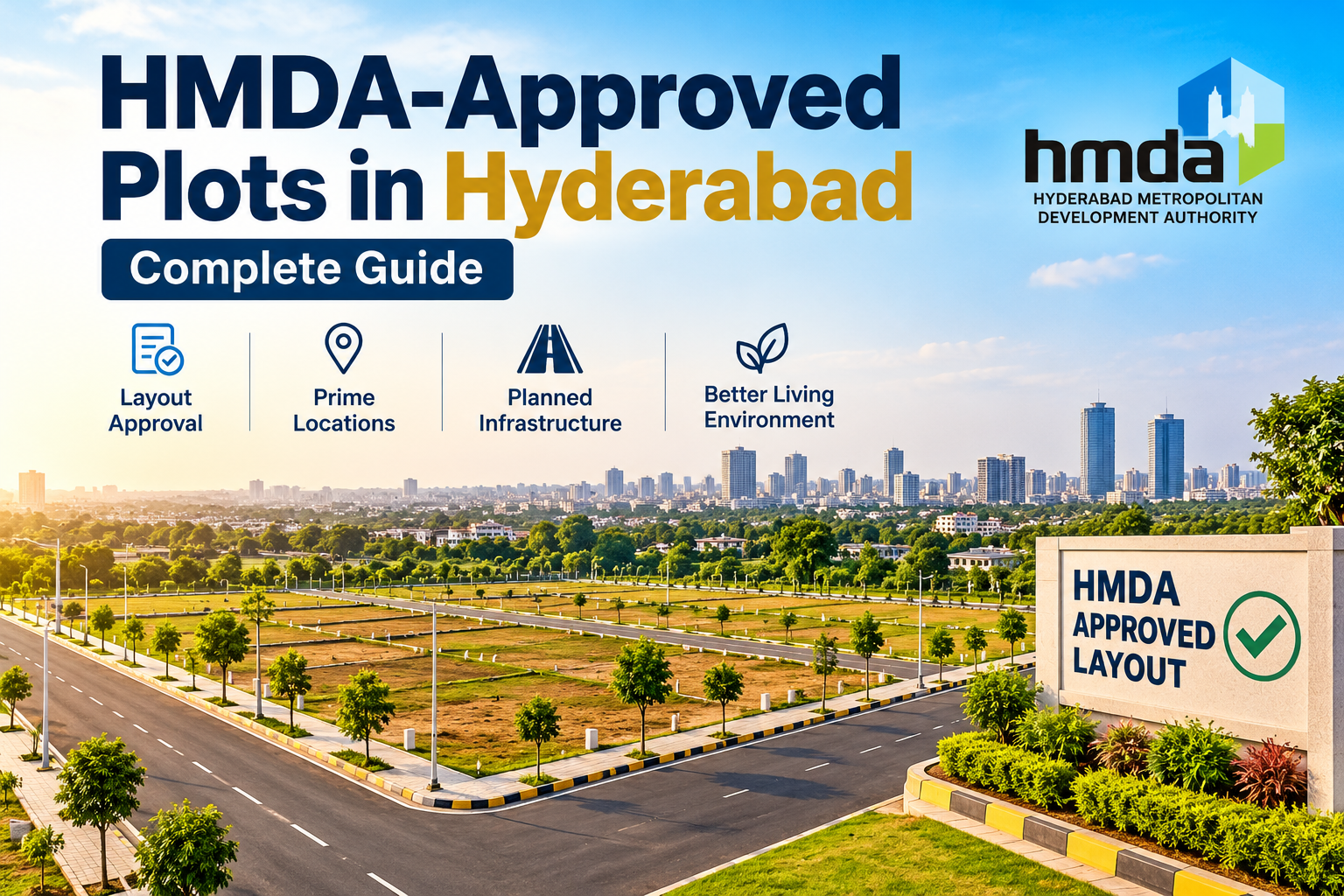
HMDA-approved plots in Hyderabad are plots in layouts that have received the relevant planning approval from the Hyderabad Metropolitan Development Authority (HMDA), where HMDA is the competent authority. Such approval can help buyers understand whether a layout has been planned according to the applicable development requirements. However, layout approval alone does not guarantee clear ownership, a dispute-free property, or future price appreciation.
This guide explains what HMDA approval means, how to verify layout permissions, which documents to check, what costs to consider, and how to make a more informed property decision.
Table of Contents
What Are HMDA-Approved Plots in Hyderabad?
HMDA is the Hyderabad Metropolitan Development Authority, responsible for planning and development functions within its applicable jurisdiction.
An HMDA-approved plot belongs to a plotted layout that has received the relevant approval from HMDA. Depending on the project and approval stage, the layout may have specific conditions that the developer must fulfil.
Approved layouts may include designated roads, open spaces, and other planned features in accordance with the sanctioned layout plan and applicable requirements.
Buyers should understand the difference between a proposed layout, a draft-approved layout, and a final-approved layout. These terms are not interchangeable. Always verify the exact approval status and conditions with the competent authority before proceeding.
For official information, visit the Hyderabad Metropolitan Development Authority website.
Why Consider HMDA-Approved Plots?
Choosing a properly approved layout can help buyers make a more informed decision about residential land.
1. Better clarity about layout planning
An approved layout has a planning record that buyers can check against the official documents. This can help establish whether the plotted development has been approved under the applicable planning process.
Buyers should compare the sanctioned plan with the actual layout and verify the specific plot number.
2. Planned roads and open spaces
Depending on the sanctioned plan, a layout may include designated roads, open spaces, and other facilities.
Before purchasing, check whether the roads shown in the approved plan match the roads available at the site. Also verify whether the developer has fulfilled the applicable development conditions.
3. More informed property decisions
Official approval records give buyers information they can use during due diligence. However, approval should be considered one part of the verification process rather than proof that every aspect of the transaction is legally clear.
4. Better understanding of development conditions
Some layouts may have pending conditions or development obligations. Buyers should establish whether the approval is draft or final and whether any restrictions affect the proposed purchase.
How to Verify HMDA-Approved Plots in Hyderabad
Verification is one of the most important steps before buying a residential plot. Do not rely only on advertisements, brochures, social media posts, or verbal promises from a seller.
Step 1: Obtain the layout approval number
Ask the seller or developer for the layout permission number, approval proceedings, sanctioned layout plan, survey numbers, village name, and relevant land details.
Check that the documents refer to the same property being offered for sale.
Step 2: Check the official HMDA records
Visit the official HMDA Planning Department website and review the available layout permission information.
You can also check the HMDA Layout Permission Report, where available records include details such as file numbers, village names, survey numbers, and layout approval information.
Match the information against the documents provided by the seller. If a record is unclear or unavailable online, contact the relevant authority for confirmation.
Step 3: Confirm the approval stage
Determine whether the layout has draft approval or final approval and identify any conditions that remain outstanding.
Do not assume that a draft approval means all development requirements have been completed. Ask the relevant authority or a qualified property professional to clarify the legal effect of the approval for your proposed transaction.
Step 4: Visit the property
Visit the site in person and compare the actual plot location with the sanctioned layout plan.
Check access roads, boundaries, neighbouring properties, drainage, electricity availability, water arrangements, and the surrounding development. These features can vary between projects and should not be assumed to exist simply because a layout has approval.
Step 5: Obtain independent legal verification
Ask a qualified property lawyer to review the title documents, ownership history, encumbrances, land classification, and applicable restrictions.
The lawyer should also confirm that the seller has the legal authority to transfer the particular plot.
Important Documents to Check Before Buying a Plot
Even when a layout has received approval, buyers should conduct separate checks on the ownership and legal status of the land.
1. Title deed and ownership history
Review the current title deed and relevant previous conveyance documents. The purpose is to establish how ownership was transferred and whether the seller has a valid title.
2. Encumbrance Certificate
An Encumbrance Certificate (EC) can provide information about registered transactions and certain recorded interests affecting a property during the period covered by the search.
It is an important check, but it does not independently establish every aspect of ownership or reveal every possible dispute.
For government guidance, visit the National Government Services Portal’s Telangana Encumbrance Certificate service.
3. Survey numbers and land records
Confirm the survey numbers, extent of land, boundaries, and other property identifiers. These details should be consistent across the title documents, layout approval, and registration documents.
Where appropriate, arrange a professional survey to identify the plot boundaries.
4. Layout plan and approval proceedings
Obtain the sanctioned layout plan and relevant approval proceedings. Confirm the plot number, dimensions, access, and any applicable conditions.
5. Tax receipts and related records
Review applicable property tax or land revenue records, where relevant. Such receipts may help with due diligence, but they do not replace a valid title investigation.
6. RERA registration, where applicable
Some plotted development projects may need registration with the Telangana Real Estate Regulatory Authority (TG RERA), subject to applicable legal provisions and exemptions.
Search the official TG RERA website for project information and registration details. Do not assume that every individual resale plot requires a separate RERA registration; the legal requirements depend on the project and transaction.
Areas to Research for Residential Plots Around Hyderabad
The right location depends on your budget, intended use, commute, infrastructure needs, and willingness to accept uncertainty.
Rather than selecting an area based only on promotional claims, compare individual projects and their surroundings.
1. Shamshabad
Shamshabad is an area to research if access to the airport and southern Hyderabad is important to you. Actual convenience depends on the property’s precise location, road access, and daily travel requirements.
Check the current development status and the approved layout details for each project.
2. Shadnagar
Shadnagar may be worth researching for buyers comparing residential land options beyond the central city. Evaluate the distance to your workplace, available services, road connectivity, and the level of development around the specific site.
Do not assume that every advertised project in the area has the necessary approvals.
3. Patancheru and nearby areas
Buyers considering the western side of Hyderabad can investigate Patancheru and nearby locations. Compare access to employment centres, public services, transport routes, and existing residential communities.
4. Adibatla and surrounding locations
Adibatla and nearby areas may appeal to people researching plotted developments in the southern and southeastern parts of the metropolitan region. Check the precise location, permitted land use, approach roads, and approval status before considering a purchase.
5. Other locations within the wider metropolitan region
Depending on your requirements, you can compare additional locations within the relevant planning jurisdiction. Always confirm which authority has jurisdiction over the particular land; not every property marketed as being near Hyderabad falls under HMDA.
Important: These are locations to research, not a ranking of the best investments. Prices, infrastructure, approval status, and resale demand vary by project and can change over time.
What Is the Cost of HMDA-Approved Plots?
There is no single price for HMDA-approved plots in Hyderabad. The total cost depends on the location, plot size, road access, surrounding infrastructure, development status, and terms offered by the seller.
Before making a decision, compare the quoted price with recent comparable transactions and the property’s actual characteristics.
Additional expenses to consider
Your overall budget may include:
- Plot purchase price
- Stamp duty and registration charges applicable to the transaction
- Legal consultation and document verification
- Survey or measurement expenses, where required
- Brokerage, if applicable
- Development or maintenance charges, if applicable
- Other applicable taxes, fees, or charges
Ask for a written cost breakdown before paying an advance. Confirm the applicable government charges using current official information.
Avoid making a purchase decision based solely on a low advertised price or an offer that claims guaranteed appreciation.
Common Mistakes to Avoid When Buying a Plot
Relying only on the approval claim
A seller’s statement that a layout is HMDA-approved is not enough. Verify the relevant approval record and confirm that it covers the property being sold.
Ignoring ownership documents
Planning approval and ownership are separate matters. A lawyer should review the title and check for relevant disputes, claims, mortgages, and restrictions.
Overlooking site conditions
An approved layout does not automatically guarantee that every promised facility is operational. Visit the site and verify actual conditions.
Paying before completing verification
Avoid paying a substantial non-refundable advance before checking the documents and understanding the proposed agreement. If you are considering a token payment, obtain written terms and independent advice first.
Assuming prices will always increase
Property prices can rise or fall. Infrastructure proposals, market demand, interest rates, and local development can affect values, but none guarantees a profit.
A Practical Checklist Before You Buy
Use this checklist to organise your due diligence:
- Obtain the layout approval number and sanctioned plan.
- Verify the layout and approval stage with the competent authority.
- Confirm the plot number, survey numbers, dimensions, and boundaries.
- Ask a lawyer to examine the title and ownership history.
- Obtain and review the relevant Encumbrance Certificate.
- Check applicable land-use restrictions and legal permissions.
- Confirm TG RERA registration where legally required.
- Visit the site and inspect roads and available services.
- Understand the complete purchase cost and payment terms.
- Review the sale agreement before signing or transferring money.
Completing these checks does not eliminate every risk, but it helps you make a more informed decision.
Conclusion
Buying HMDA-approved plots in Hyderabad requires more than choosing an attractive location or comparing prices. Buyers should verify the official layout approval, examine the ownership documents, check the property’s legal status, and inspect the site before making a commitment.
HMDA approval is an important planning consideration, but it should not be treated as a substitute for independent legal due diligence. The most suitable plot will depend on your budget, intended use, location requirements, and the verified details of the individual property.
For more real-estate information, visit DigitalPlots.site. Take time to compare options and seek qualified professional advice before finalising a land purchase.
Frequently Asked Questions
1. What are HMDA-approved plots?
They are plots within a layout that has received the relevant planning approval from HMDA, subject to the specific approval documents and conditions. Buyers should verify the status with the competent authority.
2. How can I check whether a plot is HMDA-approved?
Obtain the layout permission number, village name, survey numbers, and sanctioned plan. Compare these details with the official HMDA planning records and seek clarification from the authority if anything is unclear.
3. Does HMDA approval guarantee clear ownership?
No. Layout approval and land ownership are separate matters. Buyers should have the title documents, ownership history, and relevant encumbrance records independently reviewed.
4. Is an HMDA-approved plot always safe to buy?
No property can be considered risk-free based only on a planning approval. Verify the title, approval conditions, land-use restrictions, plot boundaries, and other relevant legal requirements before purchasing.
5. Do HMDA-approved plots require TG RERA registration?
Certain plotted development projects may require TG RERA registration, subject to applicable law and exemptions. Check the project’s status on the official TG RERA website and seek legal advice if needed.
6. Can I construct a house on an HMDA-approved plot?
Construction must comply with the applicable building rules, land-use requirements, and permission procedures. Confirm the requirements for the particular plot with the relevant local authority before starting construction.
7. Where can I find official information about HMDA layouts?
Start with the HMDA website and its planning and layout-permission resources. You can also consult the TG RERA portal for relevant registered-project information.
Disclaimer: This article is for general educational purposes and is not legal, financial, or investment advice. Approval procedures and regulatory requirements can change. Verify the current status of the particular property with the relevant authorities and consult a qualified property lawyer before purchasing.Buying a residential plot is an important decision that requires careful research, document verification, and financial planning. Hyderabad and its surrounding areas offer different types of plotted developments, but buyers should understand the legal status of a layout before making a purchase.
HMDA-approved plots in Hyderabad are plots in layouts that have received the relevant planning approval from the Hyderabad Metropolitan Development Authority (HMDA), where HMDA is the competent authority. Such approval can help buyers understand whether a layout has been planned according to the applicable development requirements. However, layout approval alone does not guarantee clear ownership, a dispute-free property, or future price appreciation.
This guide explains what HMDA approval means, how to verify layout permissions, which documents to check, what costs to consider, and how to make a more informed property decision.
What Are HMDA-Approved Plots in Hyderabad?
HMDA is the Hyderabad Metropolitan Development Authority, responsible for planning and development functions within its applicable jurisdiction.
An HMDA-approved plot belongs to a plotted layout that has received the relevant approval from HMDA. Depending on the project and approval stage, the layout may have specific conditions that the developer must fulfil.
Approved layouts may include designated roads, open spaces, and other planned features in accordance with the sanctioned layout plan and applicable requirements.
Buyers should understand the difference between a proposed layout, a draft-approved layout, and a final-approved layout. These terms are not interchangeable. Always verify the exact approval status and conditions with the competent authority before proceeding.
For official information, visit the Hyderabad Metropolitan Development Authority website.
Why Consider HMDA-Approved Plots?
Choosing a properly approved layout can help buyers make a more informed decision about residential land.
1. Better clarity about layout planning
An approved layout has a planning record that buyers can check against the official documents. This can help establish whether the plotted development has been approved under the applicable planning process.
Buyers should compare the sanctioned plan with the actual layout and verify the specific plot number.
2. Planned roads and open spaces
Depending on the sanctioned plan, a layout may include designated roads, open spaces, and other facilities.
Before purchasing, check whether the roads shown in the approved plan match the roads available at the site. Also verify whether the developer has fulfilled the applicable development conditions.
3. More informed property decisions
Official approval records give buyers information they can use during due diligence. However, approval should be considered one part of the verification process rather than proof that every aspect of the transaction is legally clear.
4. Better understanding of development conditions
Some layouts may have pending conditions or development obligations. Buyers should establish whether the approval is draft or final and whether any restrictions affect the proposed purchase.
How to Verify HMDA-Approved Plots in Hyderabad
Verification is one of the most important steps before buying a residential plot. Do not rely only on advertisements, brochures, social media posts, or verbal promises from a seller.
Step 1: Obtain the layout approval number
Ask the seller or developer for the layout permission number, approval proceedings, sanctioned layout plan, survey numbers, village name, and relevant land details.
Check that the documents refer to the same property being offered for sale.
Step 2: Check the official HMDA records
Visit the official HMDA Planning Department website and review the available layout permission information.
You can also check the HMDA Layout Permission Report, where available records include details such as file numbers, village names, survey numbers, and layout approval information.
Match the information against the documents provided by the seller. If a record is unclear or unavailable online, contact the relevant authority for confirmation.
Step 3: Confirm the approval stage
Determine whether the layout has draft approval or final approval and identify any conditions that remain outstanding.
Do not assume that a draft approval means all development requirements have been completed. Ask the relevant authority or a qualified property professional to clarify the legal effect of the approval for your proposed transaction.
Step 4: Visit the property
Visit the site in person and compare the actual plot location with the sanctioned layout plan.
Check access roads, boundaries, neighbouring properties, drainage, electricity availability, water arrangements, and the surrounding development. These features can vary between projects and should not be assumed to exist simply because a layout has approval.
Step 5: Obtain independent legal verification
Ask a qualified property lawyer to review the title documents, ownership history, encumbrances, land classification, and applicable restrictions.
The lawyer should also confirm that the seller has the legal authority to transfer the particular plot.
Important Documents to Check Before Buying a Plot
Even when a layout has received approval, buyers should conduct separate checks on the ownership and legal status of the land.
1. Title deed and ownership history
Review the current title deed and relevant previous conveyance documents. The purpose is to establish how ownership was transferred and whether the seller has a valid title.
2. Encumbrance Certificate
An Encumbrance Certificate (EC) can provide information about registered transactions and certain recorded interests affecting a property during the period covered by the search.
It is an important check, but it does not independently establish every aspect of ownership or reveal every possible dispute.
For government guidance, visit the National Government Services Portal’s Telangana Encumbrance Certificate service.
3. Survey numbers and land records
Confirm the survey numbers, extent of land, boundaries, and other property identifiers. These details should be consistent across the title documents, layout approval, and registration documents.
Where appropriate, arrange a professional survey to identify the plot boundaries.
4. Layout plan and approval proceedings
Obtain the sanctioned layout plan and relevant approval proceedings. Confirm the plot number, dimensions, access, and any applicable conditions.
5. Tax receipts and related records
Review applicable property tax or land revenue records, where relevant. Such receipts may help with due diligence, but they do not replace a valid title investigation.
6. RERA registration, where applicable
Some plotted development projects may need registration with the Telangana Real Estate Regulatory Authority (TG RERA), subject to applicable legal provisions and exemptions.
Search the official TG RERA website for project information and registration details. Do not assume that every individual resale plot requires a separate RERA registration; the legal requirements depend on the project and transaction.
Areas to Research for Residential Plots Around Hyderabad
The right location depends on your budget, intended use, commute, infrastructure needs, and willingness to accept uncertainty.
Rather than selecting an area based only on promotional claims, compare individual projects and their surroundings.
1. Shamshabad
Shamshabad is an area to research if access to the airport and southern Hyderabad is important to you. Actual convenience depends on the property’s precise location, road access, and daily travel requirements.
Check the current development status and the approved layout details for each project.
2. Shadnagar
Shadnagar may be worth researching for buyers comparing residential land options beyond the central city. Evaluate the distance to your workplace, available services, road connectivity, and the level of development around the specific site.
Do not assume that every advertised project in the area has the necessary approvals.
3. Patancheru and nearby areas
Buyers considering the western side of Hyderabad can investigate Patancheru and nearby locations. Compare access to employment centres, public services, transport routes, and existing residential communities.
4. Adibatla and surrounding locations
Adibatla and nearby areas may appeal to people researching plotted developments in the southern and southeastern parts of the metropolitan region. Check the precise location, permitted land use, approach roads, and approval status before considering a purchase.
5. Other locations within the wider metropolitan region
Depending on your requirements, you can compare additional locations within the relevant planning jurisdiction. Always confirm which authority has jurisdiction over the particular land; not every property marketed as being near Hyderabad falls under HMDA.
Important: These are locations to research, not a ranking of the best investments. Prices, infrastructure, approval status, and resale demand vary by project and can change over time.
What Is the Cost of HMDA-Approved Plots?
There is no single price for HMDA-approved plots in Hyderabad. The total cost depends on the location, plot size, road access, surrounding infrastructure, development status, and terms offered by the seller.
Before making a decision, compare the quoted price with recent comparable transactions and the property’s actual characteristics.
Additional expenses to consider
Your overall budget may include:
- Plot purchase price
- Stamp duty and registration charges applicable to the transaction
- Legal consultation and document verification
- Survey or measurement expenses, where required
- Brokerage, if applicable
- Development or maintenance charges, if applicable
- Other applicable taxes, fees, or charges
Ask for a written cost breakdown before paying an advance. Confirm the applicable government charges using current official information.
Avoid making a purchase decision based solely on a low advertised price or an offer that claims guaranteed appreciation.
Common Mistakes to Avoid When Buying a Plot
Relying only on the approval claim
A seller’s statement that a layout is HMDA-approved is not enough. Verify the relevant approval record and confirm that it covers the property being sold.
Ignoring ownership documents
Planning approval and ownership are separate matters. A lawyer should review the title and check for relevant disputes, claims, mortgages, and restrictions.
Overlooking site conditions
An approved layout does not automatically guarantee that every promised facility is operational. Visit the site and verify actual conditions.
Paying before completing verification
Avoid paying a substantial non-refundable advance before checking the documents and understanding the proposed agreement. If you are considering a token payment, obtain written terms and independent advice first.
Assuming prices will always increase
Property prices can rise or fall. Infrastructure proposals, market demand, interest rates, and local development can affect values, but none guarantees a profit.
A Practical Checklist Before You Buy
Use this checklist to organise your due diligence:
- Obtain the layout approval number and sanctioned plan.
- Verify the layout and approval stage with the competent authority.
- Confirm the plot number, survey numbers, dimensions, and boundaries.
- Ask a lawyer to examine the title and ownership history.
- Obtain and review the relevant Encumbrance Certificate.
- Check applicable land-use restrictions and legal permissions.
- Confirm TG RERA registration where legally required.
- Visit the site and inspect roads and available services.
- Understand the complete purchase cost and payment terms.
- Review the sale agreement before signing or transferring money.
Completing these checks does not eliminate every risk, but it helps you make a more informed decision.
Conclusion
Buying HMDA-approved plots in Hyderabad requires more than choosing an attractive location or comparing prices. Buyers should verify the official layout approval, examine the ownership documents, check the property’s legal status, and inspect the site before making a commitment.
HMDA approval is an important planning consideration, but it should not be treated as a substitute for independent legal due diligence. The most suitable plot will depend on your budget, intended use, location requirements, and the verified details of the individual property.
For more real-estate information, visit DigitalPlots.site. Take time to compare options and seek qualified professional advice before finalising a land purchase.
Frequently Asked Questions
1. What are HMDA-approved plots?
They are plots within a layout that has received the relevant planning approval from HMDA, subject to the specific approval documents and conditions. Buyers should verify the status with the competent authority.
2. How can I check whether a plot is HMDA-approved?
Obtain the layout permission number, village name, survey numbers, and sanctioned plan. Compare these details with the official HMDA planning records and seek clarification from the authority if anything is unclear.
3. Does HMDA approval guarantee clear ownership?
No. Layout approval and land ownership are separate matters. Buyers should have the title documents, ownership history, and relevant encumbrance records independently reviewed.
4. Is an HMDA-approved plot always safe to buy?
No property can be considered risk-free based only on a planning approval. Verify the title, approval conditions, land-use restrictions, plot boundaries, and other relevant legal requirements before purchasing.
5. Do HMDA-approved plots require TG RERA registration?
Certain plotted development projects may require TG RERA registration, subject to applicable law and exemptions. Check the project’s status on the official TG RERA website and seek legal advice if needed.
6. Can I construct a house on an HMDA-approved plot?
Construction must comply with the applicable building rules, land-use requirements, and permission procedures. Confirm the requirements for the particular plot with the relevant local authority before starting construction.
7. Where can I find official information about HMDA layouts?
Start with the HMDA website and its planning and layout-permission resources. You can also consult the TG RERA portal for relevant registered-project information.
Disclaimer: This article is for general educational purposes and is not legal, financial, or investment advice. Approval procedures and regulatory requirements can change. Verify the current status of the particular property with the relevant authorities and consult a qualified property lawyer before purchasing.